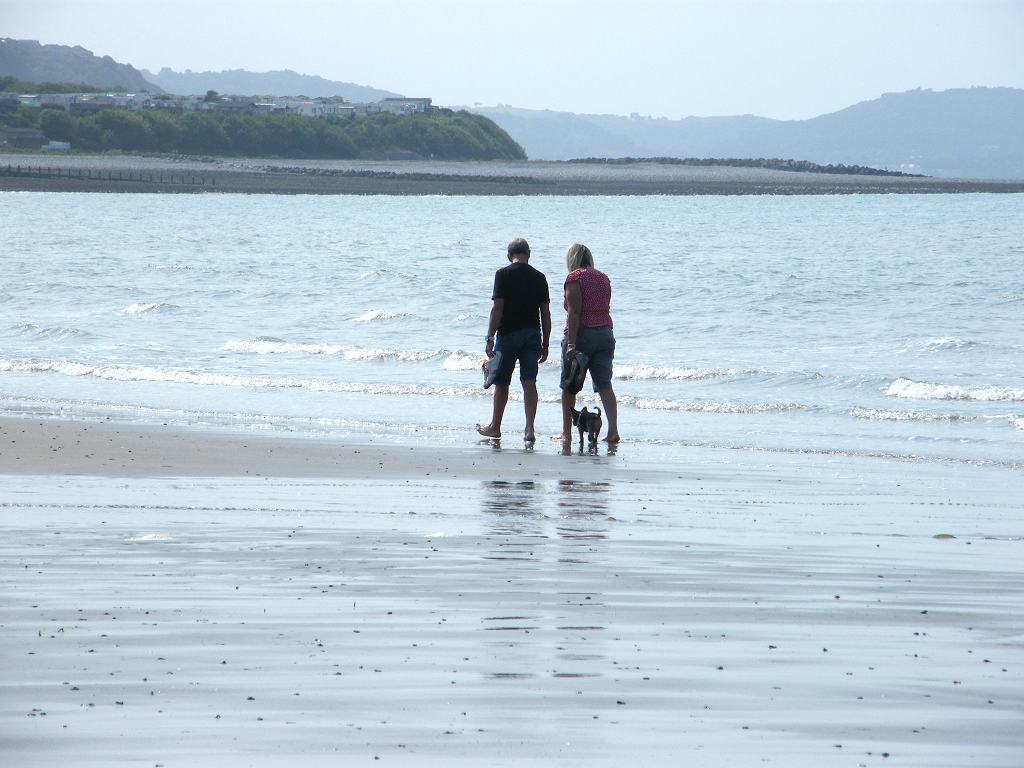
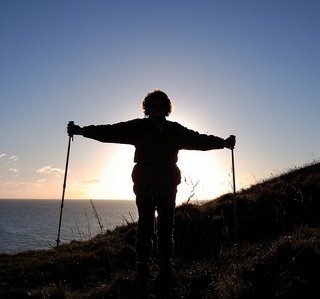
Ages: Colin was 71 years and 60 days. Rosemary was 68 years and 202 days.
Weather: Very hot and sunny.
Location: Colwyn
Bay, via Llandudno, to
Conwy.
Distance: 15½ miles.
Total
distance: 3435½ miles.
Terrain: A lot of concrete prom — flat. Grassy paths over Little Orme — steeply
undulating. Tarmac pavement round Great
Orme — quite undulating.
Tide: In most of the morning, going out later.
Rivers: No.406, Afon Conwy.
Ferries: None.
Piers: None.
Kissing gates: Nos.437, 438 & 439 over Little Orme. Nos.440 & 441 round Great Orme.
Pubs: None.
‘Cadw’ properties: None.
Ferris wheels: None.
Diversions: None.
How
we got there and back: We were staying
in our caravan on a small farm near St Asaph.
This morning we drove to Conwy where we parked for free in the shade on
a road by the river. (We couldn’t have
parked in the official paying car park anyway because they only allowed a
maximum of eight hours and we needed longer than that.) We walked up to the station and caught a
train to Colwyn Bay.
There we walked down to the seafront to where we had finished the last
Walk.
At the end we
crossed the Conwy river on the road bridge, next to the magnificent Thomas
Telford bridge which you have to pay to walk across — anyway, it was closed by
the time we got there. We walked round
to our car parked near the bowling
green, had our tea and chocolate biscuits, then
returned to our caravan.
We started this Walk quite early in brilliant sunshine — it was a lovely
day. There were lots of people about
because it was Sunday and the weather was hot.
We walked on the beach at first, but found the sand to be too soft for
comfort so we migrated to the prom.
Further on the sea was right up to the rocks and prom anyway. Despite the tide being right in, the water
was flat and calm “like a mill pond”. We
could see lots of modern windmills out to sea, half hidden in the haze. They looked a bit eerie.
We passed a Victorian water fountain made of granite. It didn’t work, of course, none of them do
these days. We decided to walk on the
lower prom away from the cyclists, but we got too hot down there so we migrated
again to the upper prom where there was a microcosm of a breeze. We saw three vivid yellow sports’ cars, all
exactly the same, parked across the road.
We passed a small garden where there was a sculpture made of strips of
metal. It depicted a fisherman with a
large fish, and was entitled “Catch of the Day”. I rather liked it, it is my kind of Art.
We came to a little harbour with the usual
small leisure boats moored in it.
Nearby, on a slipway, families were catching crabs. The shops and cafes across the road were busy
even at this early hour — it was around ten o’clock-ish — and the wild flowers
in the shingle at the top of the beach were gorgeous. Altogether the scenes made us feel good to be
alive!

The prom petered out as we rounded a point, so we walked along the grassy
top of the beach. But there was a fenced-off derelict site in our way and we
had to balance along the outside of railings to get past. Then we climbed through the railings because
it was easier to walk on that side.
Back
on the prom we came across a tiny chapel, said to be the smallest church in Britain as it
has seats for only six people. It is
dedicated to St Trillo, a sixth century saint, who lived there as a
hermit. His drinking water was supplied
by a freshwater well which still exists under the little altar. Through the centuries this water was used for
Baptism throughout the local parish, and the well also gained a reputation as a
healing well. Occasional services are
still held in the little chapel.
We sat
on a rock to eat our elevenses — pasty for Colin and quiche for me.
We continued along the upper prom towards Little Orme. We saw some youths collecting litter on the
beach and wondered if they were Scouts.
They looked about the right age.
We didn’t go down on to the beach when the prom ran out because it looked
rocky (so we persuaded ourselves), and we knew we would soon have to climb up to
Little Orme anyway. We couldn’t see a
way up from the other end of the beach.
So we took a road inland, which wasn’t much fun in the heat, and then
walked through a housing estate. There
we met a path coming up steps from the other end of the beach! At the end of the estate we had to climb up
steps into an old quarry. There is a
wheelchair route, but it is only open to those with a Radar key. We have these keys, but we climbed the steps
anyway because we can.
We emerged into a disused limestone quarry which is now an open access
space. We walked to the end where there
were magnificent views and wild flowers everywhere. The litter-picking youths followed us up,
then went down another steep path to a tiny isolated beach. While they were on top, two of them were
transferring rubbish from one bag to another, and we couldn’t think why.
We looked around for a coastpath sign, and realised we would have to
backtrack a little in order to climb a steep grassy path to the top. Phew!
It was hot heaving ourselves up there, and we could hardly believe we
had done it when we eventually reached the top.
We frequently stopped “to look at the view” (not to have a rest —
never!) and there was plenty to see.
There were little boats buzzing around far below, and loads of windmills
looking ethereal in the mist.
We met
several people walking up as well as down despite the heat and the
steepness. Everyone was sweating
buckets!
There was the remains of some winding gear at the top of that path, and
we could see Colwyn
Bay spread out before us
until it disappeared into the haze. The
path seemed to continue up and up, but we didn’t quite have to climb to the top
before we started coming down. It was
extremely hot by now, especially difficult when we got into pockets sheltered
from the gentle breeze. It had turned
into a blistering day. We came out on to
a road, and had to walk down a pavement next to heavy traffic in order to get
back to the shore.
We walked along a grassy path at the top of the beach. There were loads of people about enjoying the sunshine on this hot
Sunday. We sat on a bench to eat our
sarnies and watch the world go by. To
our surprise (we have never been to Llandudno before) the beach was steeply
shelving and stony.
There was no one
actually in the sea, and a bit further on we came to a large shallow pool on
the prom which was full of children enjoying themselves. But the colour of the water was horrible, for
it was green with algae. I wouldn’t have
liked my grandchildren to play in it — it’s a wonder it was allowed in these
days of “elfin safety”.
We passed an imaginative children’s playground (children are so lucky
these days) and people learning to sail.
Five-minute speedboat rides would have cost us £4 each, so we passed
them by. There was a “Welcome to
Llandudno” sign on the bandstand, but tonight’s concert was cancelled — they
didn’t say why.
We loved the buildings on the other side of the Parade — four storey
Victorian terraces, mostly hotels and boarding houses facing the sea. It gives Llandudno the look of a real
old-fashioned seaside town, which it is.
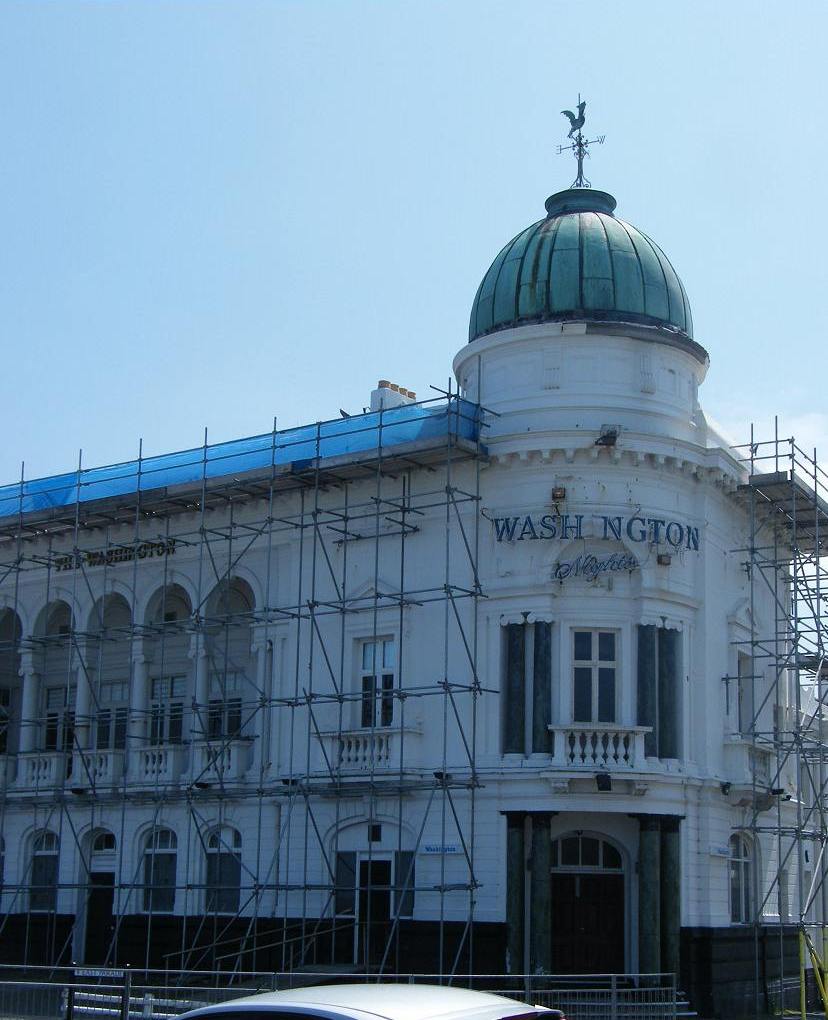
One building had a small dome which reminded us of the sadly missed Rex
Ballroom in Bognor which was demolished (shame!) back in the 1970s, soon after
we moved to the town.
We followed fat bottoms for miles!
Many seemed to be pushing equally fat people in wheelchairs, and it
seemed to be a toss-up as to who was most in need of the wheels. Do they swap roles every so often? we
conjectured. We wondered how much their
previous life-style had contributed to their needing a wheelchair in later
life. We were sure that a lot of these
‘old’ people were younger than us.
We passed the Mad Hatter’s statue, which we loved. This end of the prom was far more crowded,
but it was a good-natured crowd and made for a jolly atmosphere. This was added to by loud music playing for a
group of people who were line dancing, some not very well which added to our
amusement. We passed a couple who had
the tiniest dog I have ever seen, it was hardly bigger than a hamster! It was a mixture of a Chihuahua and something else and was only a
puppy as yet, but its owners said it wouldn’t grow much before reaching
adulthood. Despite its small size, it
didn’t seem at all fazed by the crowds of people wanting to stroke it.
The beach at this end of Llandudno is sandier, and it was packed with
people revealing acres of flesh to the hot sun, a sun so hot I got burnt on my
neck despite wearing a collared shirt.
Don’t they know what they’re doing to their health? No wonder the NHS is in such a mess, what
with the obesity crisis, alcoholism and cancers due to smoking and sitting in
the sun. There is no room in the
hospitals for the unfortunate few who suffer from conditions through no fault
of their own — like Colin’s incontinence caused by his treatment for prostate
cancer. (I mustn’t rant…….)
We turned for the pier, where the crowds thickened and there were booths
selling every kind of tourist tat you can think of. There were also games to play, like “blast
the pirates” and large airtight balloons floating on a pool which children
could get inside and try to stand up. I
would never have fancied that, but the people loved it all!
I wanted an ice cream, but Colin refused to
stop at any of the outlets which sold the usual commercial — what he calls
“rubbishy” — brands. I thought we had
missed out, but further along the pier we found a stall that sold real ice cream where we could choose
delicious flavours. What’s more, we
could sit at a little table in the shade to eat them — that was a real
treat!
We walked to the end of the pier where there were fishermen on a lower
platform. This is such a good idea
because they are away from the crowds and can flick their rods without
endangering anyone with their hooks.
There were good views from there, especially of Great Orme where we were
going next.
On our way back we couldn’t
help noticing that every third person seemed to be obese. Some of them were revoltingly FAT,
yet were bolting down junk food as if there was no tomorrow. I suppose I am smug because, despite having
difficulty keeping my weight down, I have succeeded in losing 10% of my
bodyweight since last Christmas through sensible eating. (Note to self: I mustn’t keep taking photos of obese people
like I did at Skeggie!)
We came off the pier and turned on to the toll road which
runs around Great Orme. We lost the crowds straight away. We passed through the
ornate toll gate, but the £2.50 toll is only for cars, pedestrians are
free. The road is narrow so it has been
made one-way, the way we were going. We
walked gradually uphill on a pavement by the side of the road cut into the
mountain.
There was a stony beach below us at first, but this soon gave way to
cliffs. Climbers were trying to scale
the heights on the other side of the road.
Out in the sea there were jet skis and speedboats buzzing about. Fishermen were trying their luck off a low
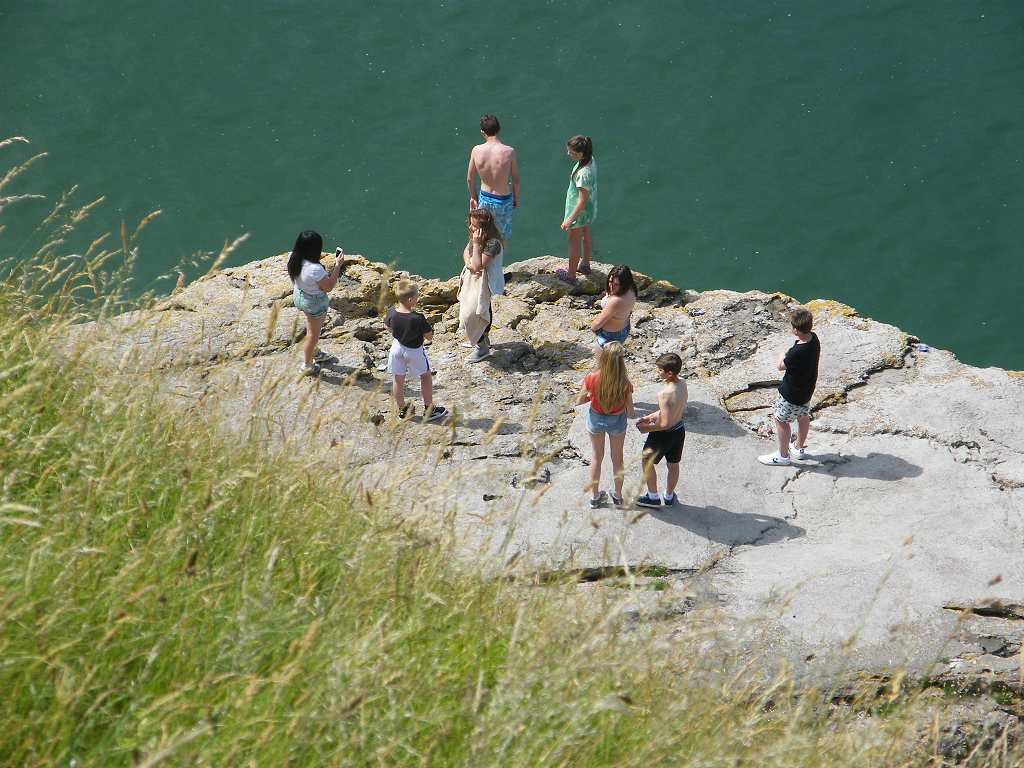
cliff. And a group of children were
daring each other to jump off a rock shelf into the sea. One of the boys did jump off, but none of the
others did. He seemed to regret doing
it, but although he was a bit shocked he was OK. It was a dangerous situation, and these
youngsters don’t seem to realise how reckless this behaviour is.
Higher and higher we went — the road seemed to go on forever. Of course we were tired and very hot. But the wild flowers were lovely, especially
the harebells which seemed to be everywhere.
We saw some wild goats which Colin stopped to photograph.
I plodded on, up and up, because I didn’t
want to stop until I got to the café which I knew was at the head of the
peninsula.
We passed a lighthouse B&B which reminded me of the house my
grandfather lived in when I was a child.
Grandad lived in Arundel, Sussex, and worked on the Norfolk estate as Clerk of Works. His house came with the job — it belonged to
the Duke of Norfolk and was built as a pseudo-castle with red painted doors. I loved
that house, so the B&B brought back happy memories of my childhood
holidays.
But I still didn’t stop until
we arrived at the ‘Rest and be Thankful’ café.
How delicious and refreshing was that cup of tea! Unfortunately the café toilet was out of
order, but we were so dehydrated neither of us actually needed it.
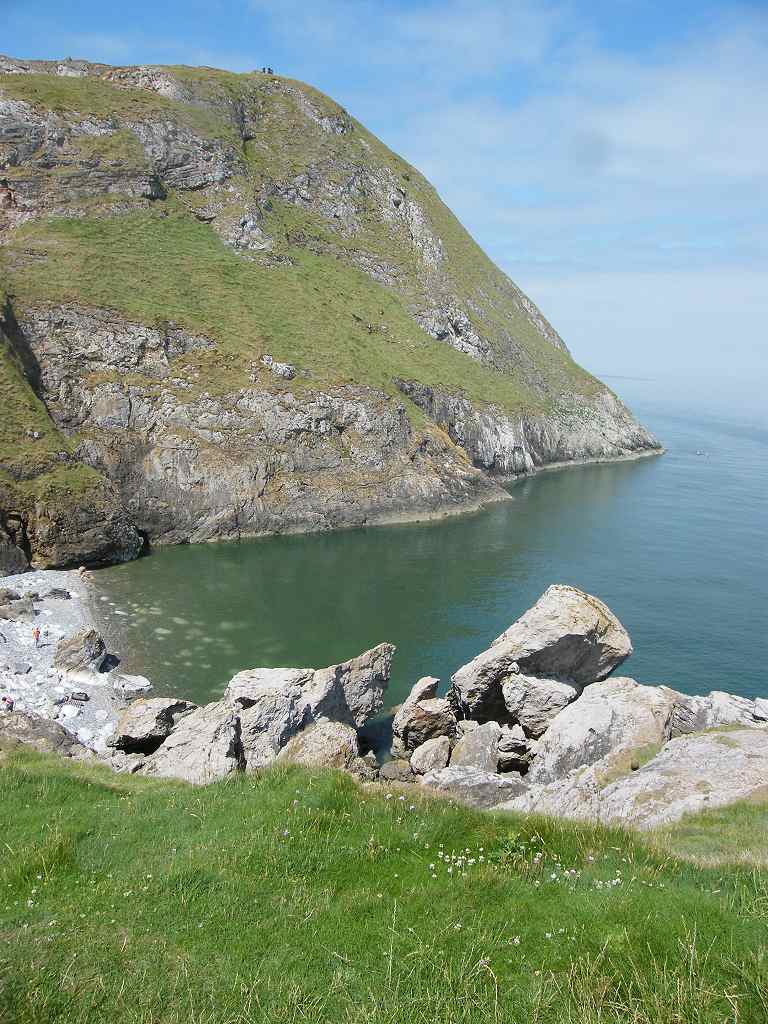
Much refreshed, we rounded the end of Great Orme, then it was downhill
all the way. We were walking above the
estuary of the River Conwy. We passed
two cars full of Jews who had got out to look at the view. They were dressed in their full regalia —
they must have been hot in their long black coats and big black hats (that’s
how we knew they were Jews). Even the
young boys were wearing black skull caps.
We saw a path leading down to a lower road, but it was still so hot we
elected to stay on the upper road where there was slightly more breeze.
We passed a notice which told us about the area below us where there was
the remains of a Coastal
Artillery School. This was transferred from Shoeburyness in Essex in 1940 to get it away from the bombing raids on
the east coast. It’s location was kept
very secret, and the buildings were disguised as cottages and a chapel. Now only the concrete bases are left.
Nearby we passed a tree which had been very
bent in the wind. It illustrated to us
the fact that the weather on Great Orme is not always as benevolent as today!
We could now see the Conwy bridges in the distance — the end of our
Walk. We came to a shelter which was a
memorial to a sixteen year old boy who died in an accident on the Welsh
mountains. To our left were overhanging
rocks, some of which were netted to stop them falling in the road.
The tide was well out, and there were people out on the sandbanks. They either hadn’t seen, or had ignored, the
huge warning notice which read: “Offshore sandbanks are dangerous, and are
cut off from the shore by the incoming tide.
Do not proceed beyond the lowest part of the beach under any
circumstances. A rescue raft is located
on the highest portion of the sandbank during the months of April to October
(inclusive).” See, they knew people would ignore the warnings
and get cut off, as three youngsters nearly did whom we observed struggling
back to the beach. Further on we watched
families playing safely on the lowest part of the beach — it was good to see.
We passed the fancy toll house at the nether end of the toll road — it
was for sale. Colin was desperate for a
toilet by now. One was marked on the
map, but we couldn’t find it. In the end
he had to hide himself in the dunes — when we got to them. (Can’t
the medics understand how awkward and embarrassing his life can be when they
keep cancelling his appointments and fobbing him off? And the local Councils who close and
demolish public conveniences?)
We were now at sea level, no more hills today! We passed a boating pool — there were lots of
people about but no one was using it. We
sat on a bench to eat our chocolate. The
cycle path we were following was too gritty to walk on comfortably, so we went
down on to the beach for a while. Conwy,
and the end of our Walk, was getting nearer!
We passed a notice which read, “Terminal
point of the definitive right of way”.
No, we didn’t understand it either, especially as the path after the
notice was exactly the same as the path before.
We saw a cormorant on a sandbank — he can’t read notices, and can fly
away to safety! We saw lots of yachts
when we were opposite a marina. And
there were wild flowers all over the place.
We came to a level crossing where there was a public convenience at last.
But it was a paying cabin-type, so we used our Radar keys. Inside, a disembodied voice intoned, “You
have fifteen minutes and then the door will automatically unlock!” This was followed by a loud ticking noise
until we unlocked the door ourselves. We
found this to be quite spooky!
We thought we would have to walk alongside a main road from there to the
bridge, but a permissive cycle path on the other side of the railway meant we
didn’t have to. We turned at the end and
walked over the end of the ‘sewer pipe’ road tunnel, though we didn’t realise
that until we looked closely at the map later.
(More about this road tunnel on Walk 334.) We walked through some gardens, and then over
the ‘new’ road bridge, built in 1958 across the River Conwy. It is next to Thomas Telford’s famous road
bridge which is next to Stephenson’s famous box railway bridge — the three
bridges together.
We were right by Conwy
Castle, and that is where
we finished our Walk. A very enjoyable
and interesting Walk on a glorious day!
That ended Walk no.332, we shall pick up Walk no.334 in Conwy by the
castle and bridges. (Walk 333 will be an
historical tour of Conwy.) It was five
past seven, so the Walk had taken us nine and three-quarter hours. We walked round to our car parked near the
bowling green, had our tea and chocolate biscuits, then returned to our caravan
near St Asaph.


 Back
on the prom we came across a tiny chapel, said to be the smallest church in Britain as it
has seats for only six people. It is
dedicated to St Trillo, a sixth century saint, who lived there as a
hermit. His drinking water was supplied
by a freshwater well which still exists under the little altar. Through the centuries this water was used for
Baptism throughout the local parish, and the well also gained a reputation as a
healing well. Occasional services are
still held in the little chapel.
Back
on the prom we came across a tiny chapel, said to be the smallest church in Britain as it
has seats for only six people. It is
dedicated to St Trillo, a sixth century saint, who lived there as a
hermit. His drinking water was supplied
by a freshwater well which still exists under the little altar. Through the centuries this water was used for
Baptism throughout the local parish, and the well also gained a reputation as a
healing well. Occasional services are
still held in the little chapel. We sat
on a rock to eat our elevenses — pasty for Colin and quiche for me.
We sat
on a rock to eat our elevenses — pasty for Colin and quiche for me.








 But I still didn’t stop until
we arrived at the ‘Rest and be Thankful’ café.
How delicious and refreshing was that cup of tea! Unfortunately the café toilet was out of
order, but we were so dehydrated neither of us actually needed it.
But I still didn’t stop until
we arrived at the ‘Rest and be Thankful’ café.
How delicious and refreshing was that cup of tea! Unfortunately the café toilet was out of
order, but we were so dehydrated neither of us actually needed it.